I have a love/hate relationship with (North American) LGBT fests but my short film Bros Before got into a few of them and I said yes because I just want it to get seen by anyone willing to watch it. I decided that if I was going to attend these film festivals, though, I was at least going to make a dumb, cheeky zine poking fun at them and leave them lying around everywhere. It’s mostly based on my experiences watching the trans shorts blocks at LGBT fests over the past several years (some of which ended up being the container for my film, lol). I thought it was really dumb and annoying how most of the shorts about being trans were, like, edutainment for cis people – all flawless heroes and suicidal melodrama. To be fair, it’s not entirely the fault of the film festivals. For reasons that are totally beyond me, many people have chosen to make movies like this. But I think that it’s impossible to separate trends in art from the gatekeepers of its distribution. So I’m gonna pick on the powerful institutions here instead of the artists.
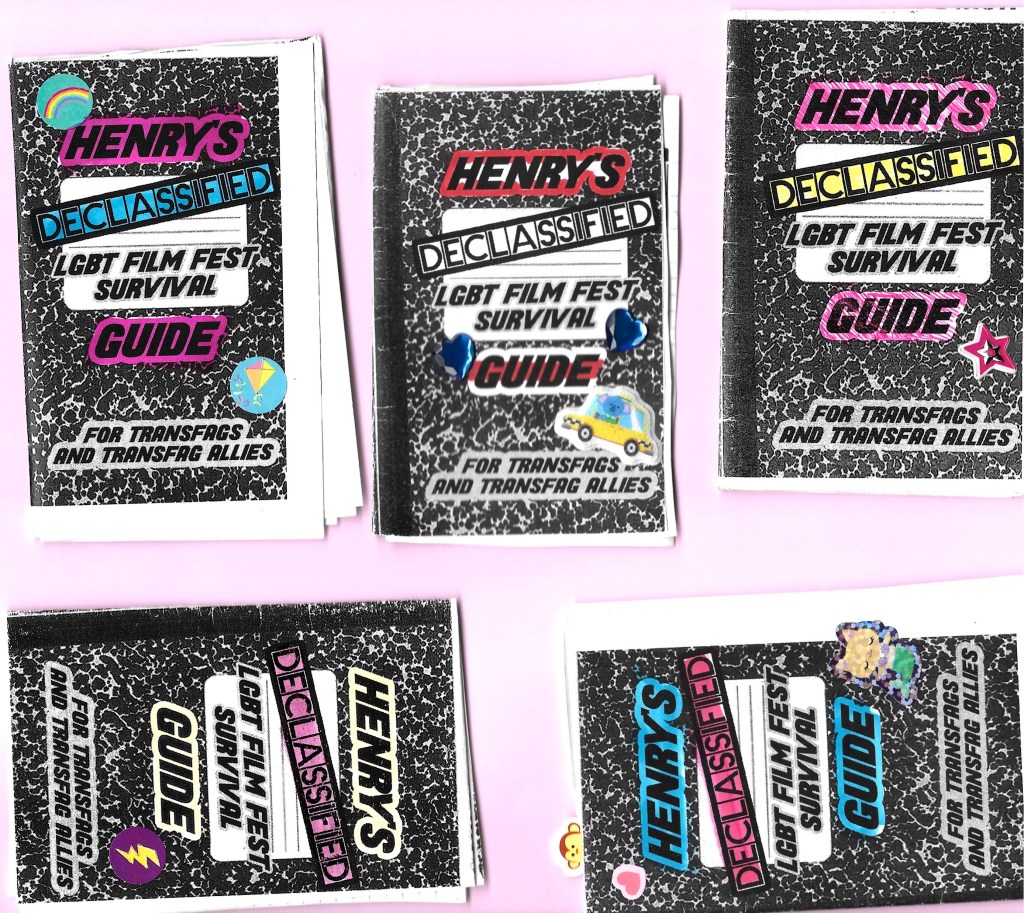
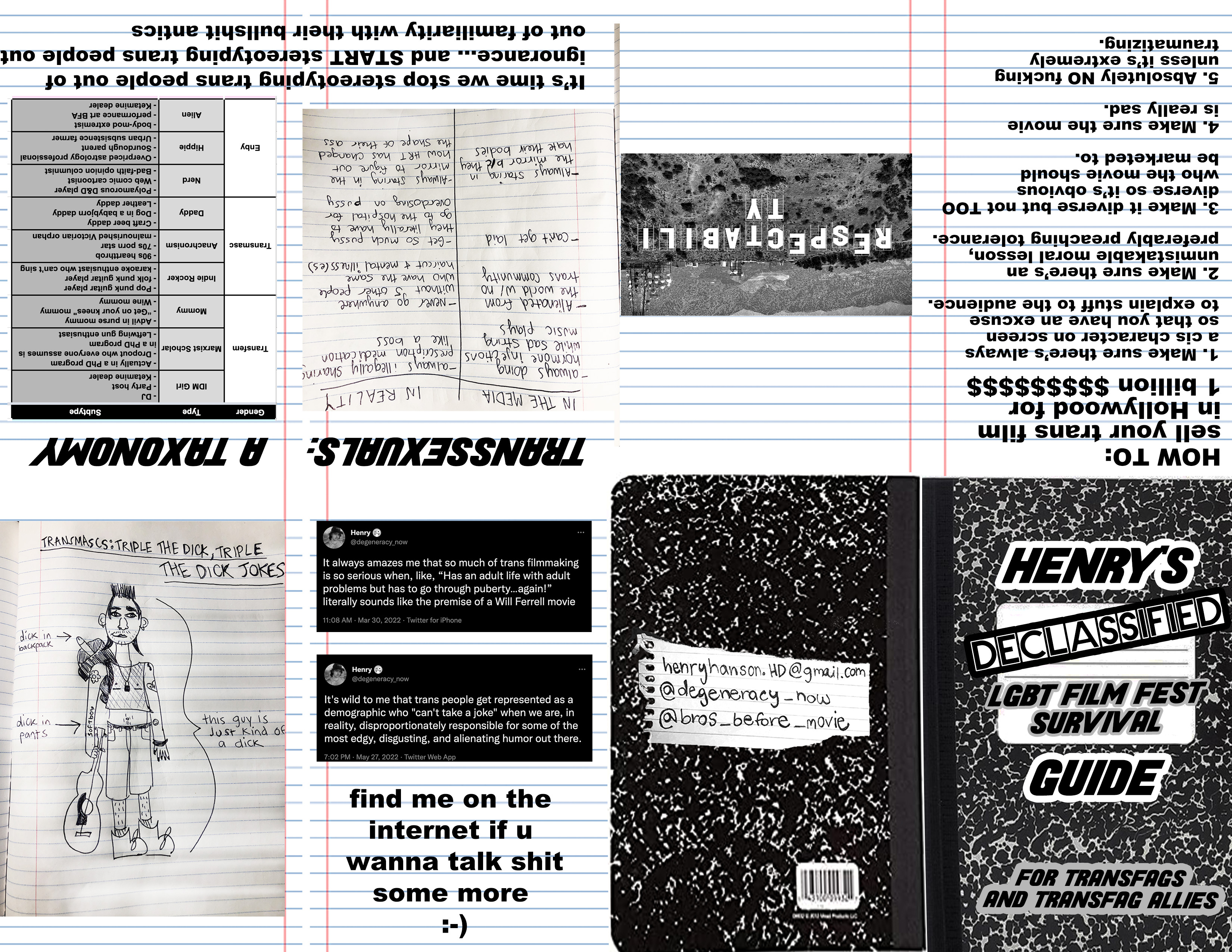
Every zine I folded ended up being unique, since I decorated them all with stickers and markers. Sometimes friends helped me, which was super fun. Here’s a scan of one of my faves (readable version). I’m also including a version you can print and fold and decorate yourself (printable version). Enjoy!
If you made it this far and you’re a huge nerd who wants to read EVEN MORE, please enjoy this quote from B. Ruby Rich’s essay “What’s a Good Gay Film?” from her 2013 book of collected essays and articles “New Queer Cinema: The Director’s Cut”:
In the fabled 1970s, when the first gay and lesbian film festivals started and the first round of self-consciously up-front homopolitico films began playing to audiences whose very act of identification was deeply ideological, a model was established. Everything took place on the fringe, disconnected from mainstream popular culture both by choice and by exclusion. This oppositional culture was deeply tied to the political debates of the time, aiming to eradicate “prejudice” and instill “pride.” The emphasis was on documentary, the agenda was civil rights, and status depended on claiming an identity as an oppressed class…
Moments of origin always cast a long shadow. Today queer film and video still bear a birthright linked to the umbilical cord of post-Stonewall gestation. There’s a generation of elders that expects film and video to toe an eternally prescribed line of righteousness and legitimacy, while ever new and needy generations recycle the old and add their own requirements. These queer publics want films of validation and a culture of affirmation: work that can reinforce identity, visualize respectability, combat injustice, and bolster social status…
 DEGENERACY NOW!
Leave a comment